Everything and the Mobile Software Universe…

  • rss
  • Home
  • About

No Qt for S40, Maemo and Symbian apps won’t be compatible: is Nokia really willing to unify development for OVI Appstore?

Thomas Menguy | January 4, 2010

Despite all what can be read everywhere, Nokia is still an incredible company:

  • They have a formidable supply chain (and you have when you are selling arounf half a billions phones a year)
  • They are the only phone brand who is making money from emerging countries
  • They have an incredible story of reinventing themselves from paper factory to wheel, TV set, phones and network equipments, now why not services?

For me they have everything in hand to succeed and stay the undisputed leader. Even if lately Nokia has been under fire, with its first loss in ten years, they are actively pursuing new ways to recover

  • Services startegy, with a lot of acquisitions around OVI (Dopplr, Plazes, Navteq, Trolltech, Symbian, Plum, cellity, etc. See this url for a full list: Nokia acquisitions)
  • Hardware differentiation: netbook (nokia booklet 3G)  and widening Intel cooperation (check my article around this here)
  • Software consolidation to allow common deployment accross the 3 Nokia’s device software platforms: S40 for low-end phones, Symbian new S60, called Symbian^4 and the next Maemo 6

The last point was, for me, the best way to make OVI appstore a success, to allow developers to target hundreds of millions of phones, then billions in few years … and Nokia didn’t and won’t, for now, deliver it, here is why:

The first part is in this “Nokia Software Strategy WhitePaper” from December this year (2009), found at Nokia Hosted Presentations :
The following graphic speaks for itself:

S40 development will be limited to java:

  • no Web runtime, so no webkit, but we are talking here of low cost phones, low data throughput,  low CPU, low RAM so this is not a big surprise (WebKit is not exactly an embedded browser)
  • NO QT!  j2me is here for a while…

This is pretty clear : Nokia didn’t manage/want to open-up S40 with an externalizable SDK, and this is a big surprise! For the little story OpenPlug has made it for the very very low cost SonyEricsson J132, just to say that it is possible.
So what happened? Political internal war? Lack of vision? Lack of resources?  I bet on the first one, Nokia is such a big company that refocusing and putting energy in a single direction is really difficult.

It doesn’t stop here : Nokia is developing two incompatible UI frameworks on top of Qt, one for Maemo 6 and one for Symbian^4. So, as a corollary, there is NO chance that a Maemo application will be Symbian^4 compatible without a complete rewrite of the presentation layer, bad news for the developers.
To have all the details, check this thread and this thoughtful post: Maemo 6 loosing source compatibility with plain Qt, and Symbian^4, to sum it up, here is what happened:

  1. Qt is an “old generation” UI framework with WinXP like normal widgets, no animation, no fanciness
  2. A QGraphicsView has been added to allow the creation of animated and fancy widget, like the iPhone ones for example
  3. BUT : no standard widgets has been created on top of it
  4. The Nokia Memo team has created its own set of new generation widgets called Maemo Direct UI (Maemo DUI)
  5. …and the Symbian team also! for Orbit now called 4 Symbian^4 UI framework.

So here we are, to add a simple button, a list or a table or any UI building blocks, a developper will have to use different APIs to do the same thing, once for Maemo, the other for Symbian, aleviating nearly all the Qt advantages and promises for UI commonality.

What I believe the Symbian and Maemo teams in Nokia need to do now is get together and fix this before it’s too late

Mark Wilcox

And I can’t agree more…they have to fix it before releasing it to the wild.

Again political fights, point of views, and over engineering seem to be the root cause of this non-sense, but perhaps also the Nokia DNA : Nokia is building products, not platforms (if the S60 licensing failure and application development nightmare is any indication of it…), and this is an area where they really need to reinvent themselves if they are serious about their services strategy.

Of course OVI appstore won’t fall apart because of this Maemo/Symbian split, but it will bring more hurdles to application developers, so less applications, and less innovation to the Nokia platform. S40 remaining closed is a much higher subject of concern, as it really looks like a missed opportunity. For the first time I do think that Samsung with Bada (check my article here) has a more pragmatic and comprehensive platform software strategy than Nokia (times are changing…).

Any comments?

Comments
2 Comments »
Categories
Uncategorized
Tags
DUI, maemo, mobile, nokia, Orbit, OVI, phone, qt, symban
Comments rss Comments rss
Trackback Trackback

Why Samsung Bada makes sense vs an Android-me-too journey

Thomas Menguy | December 28, 2009

Recently Samsung announced Bada, a new development environment: in a nutshell this is an SDK with a set of C/C++ API associated to an application framework, ported on top of Samsung legacy RTOS, or Linux.
Bada will be deployed in a majority of Samsung touch phones from smartphones to feature phones.
Antony has been quicker than me and posted a nice Bada article at Vision Mobile, depicting why this Samsung move may prove to be a wise one. I mostly agree with him, his arguments are around gross margins, market pressure and differentiation. I’ll try to dig a little more around this differentiation aspects in the Samsung case and why they really seem to innovate in this area, especially versus an Android strategy.

When Bada was announced, I was very negative, my first reactions and comments were harsh: again a me too initiative from Samsung, the OEM with fantastic execution but no clear vision of its services/software strategy, trying all the available OS on the planet and waiting to see if one is successful.
Then I’ve looked back at what they achieved recently and what they’ve announced with Bada.

  • They are now the undisputed number 2 in number of devices sold (not far from 20% of the market in Q2 2009 for ex)
  • The Touchwiz UI 3.0 is on the smartphones AND ALL the other touch phones of the company: difficult to tell who is or is not a smartphone now (I’ve made the experiment at the last CTIA).
  • Release of the Touchwiz UI widget SDK to develop widgets for all the Touchwiz based phones.

What are they trying to do with this TouchWiz UI ?: use the best software platforms (RTOS for cost effectiveness and integration, high level OS for SDKs and features) while trying to uniformize the user experience and consolidate the Samsung brand.

Obviously the next step, to retain its customers, a politically way to say “lock them in”, is to have exclusive applications and services accross the Samsung devices line…even better if the customer has paid for it so he won’t throw away its application investments to buy a competitor phone for its next purchase. Same strategy as Apple, but here we are talking about Samsung a company with dozens if not hundreds of different device models, across all the price ranges, selling more than 200 millions phones a year (yes a year! how many iPhones sold today? :-) , ok margins, blablabla…and yes I have an iPhone).
How to do that? Make a robust application environment, OS agnostic, with a dedicated SDK, to allow deployment of the same binary to a range of devices with different software platforms … well this is exactly the description of Bada.
We (speaking in the name of OpenPlug in this sentence only) have advocated this very same idea for the last 7 years to push OEMs in this direction (Samsung and Nokia were part of the lot :) ), and this is at the end taking of : Nokia with Qt (still has to deliver but the intention is clear) and Samsung with Bada.

But why creating a new one and not simply reuse Android code base?…I’m sure you have the answer already:

  • Android is free? Android is by no extend free: you have to pay a lot of your R&D budget to make a phone with your brand, your services, etc…
  • Android is open, why not getting it? NO Android is a closed box, Google and only Google can really change it, it’s really time for the industry to wake up: it’s not because you have the code of something that you can control it. If you don’t have the roadmap and the team who is maintaining and developing it you simply have meaningless mega bytes of symbols :-)
  • …but this is from Google, the good guys! Sorry, they are not, they are pushing their own services, not yours, and now with the NexusOne their own phone and user experience.

Google/Android has a complete opposite aim versus OEMs own agenda:

  • Android is here to push Google services in the mobile world, as a corollary it allows you to swap your device as easily as possible because the new one will have all your data and applications loaded and compatible from the old one.
  • … wait,wait this is exactly what an OEM doesn’t want: an OEM wants you to buy your next phone from them, not the competitor. So you have to differentiate.

Samsung, like Nokia, simply doesn’t want that an external third party software house decides if its devices has to be like that or like this… to be look alike brothers to its direct competitors (check the Windows Mobile phones for the last 5 years, and you will get the point : all the same).
So why not following their own path? Apple has made the choice and is successful, Nokia is trying, Samsung has to move, and for me it is doing so in a more pragmatic way than Nokia:

  • Bada is not about reinventing a new OS with the underlying plumbing to the hardware as is Nokia Mameo, who cares of that today?
  • The User Experience is already in production and refined device after device
  • Bada SDK is not “fancy” but raw C/C++ … but what the point as long as I can sell and do my applications for hundred of millions of devices and customers (let the fun to the WebOS guys…I’ll get the cash)

Of course Bada is not quite their today, where are the devices? where is the market place? But it is refreshing to see Samsung taking its own path, its own direction…opening even more opportunities to application developers.

Comments
7 Comments »
Categories
Mobile Industry, Uncategorized
Tags
android, Apple, bada, iphone, mobile, Mobile Industry, mobile_phone, nokia, qt, samsung
Comments rss Comments rss
Trackback Trackback
Flex on Mobile: What’s coming in ELIPS Studio…iPhone insights (and android teasing :) )

Thomas Menguy | December 1, 2009

Perhaps you don’t know, I’m the Tech Lead of the ELIPS Studio Product (feel free to try it for free here!) . For those of you who have already jumped on board, I really hope you enjoyed the first releases we have posted …and you have as much fun playing with it as we have building it!
We are pretty busy right now bringing some exciting stuff to the table, like, well, as promised the iPhone.
I just wanted to share with you the approach we have selected, and the path we are following.

iPhone : Widgets and the runtime part
We have decided to follow a different path than for the other platforms regarding widget handling.
As you all may know the S60 and WinMob widget toolkits are well, pretty dated and replacing it by some modern flex widget is a definitive plus. But in the iPhone case, this is the opposite, the iPhone has a very comprehensive, modern and user friendly widget toolkit, with physics, hardware acceleration, etc…and Apple requires you to use it to pass its dreaded Appstore approval.
So we had two choices here:

  1. Redeveloping, in Flex the iPhone widgets so applications will  “as much as possible” look like real iPhone ones, or ..
  2. Mapping the Flex UIComponent widget tree directly to real iPhone widgets to leverage the platform strength

The first solution has its advantages, like code reuse accross platforms, consistency when developing in the simulator vs a real phone opposed to the second one which is requiring a much bigger porting effort, impossibility to precisely simulate the application, BUT when you do an application at the end, it really feels like a real Objective-C one, following iPhone standards … but coded in AS3.
So yes we’ve taken the hardest path: we have followed the native widget route … and we are pretty happy about that :-)
The biggest issue with such an approach is for us, not for you: this is the porting time.  We have to map all the iPhone widgets with their yet to be created MXML counter part and implement those new MXML widgets in a generic form (read pure AS/MXML) for the other platforms.
Today the iphone list is mapped, meaning that you simply have to declare a list with your own item renderer, data provider everything you know and love … and it will look and behave like a real iPhone list, with its unmatchable physics and hardware acceleration for smooth scrolling. Look at the following video for a very simple list with an item renderer in Flex and a data provider …no iPhone code at all but a real iPhone list anyway :-)

Text entry (in place and not in place) is ported too.
Of course all the “normal”, non mapped widgets are working well and can be completely and transparently mixed with the native mapped one: you won’t notice the difference.
And we are at  that point: Shall we release it to let people try it even though a lot of widgets are not mapped? Or shall we work a little bit more to map all  iPhone widgets?

iPhone : the toolchain
As you have noticed, for now, our tools are Windows only (just to let you know I’m writing this article on my Mac :-) ). Perhaps as you know too from our documentation we are compiling the MXML/AS to C++ for the applications, but also to develop our runtime and libraries: for the iPhone we have simply used our compiler and tools to generate a bunch of C++ files from our Flex SDK, alongside an XCode project then we transfer it to a Mac and we are able to build a fully native iPhone application, right from XCode, running in simulation and on device with C++ debugging….sweet.
In that case, for the application developer,  the flow is:

  1. Develop in FlexBuilder With ELIPS Studio plugin on a PC (or better on a Mac, in a Windows VM, like Parallels, my favorite, or VMWare)
  2. Generate the C++ files from your MXML/AS with the ELIPS Studio build button
  3. Put this source tree on a Mac (if you were working on a VM … simply put it in a shared folder of your VM)
  4. Open it in XCode, build, simulate, debug, deploy on the Mac

Of course in parallel we are working on a full Windows only toolchain, based on one of the patented unique OpenPlug technology: platform independent software components (used today in our WinMobile and Symbian platform and on Android also, oups, yes I’ve said that too :-) look at the video , exact same list code as in the iPhone video, but in “Flex Only” mode, no natif mapping, pure MXML/AS for the list implementation:

Look at the performance on a G1 :-) ).

Bottom line, we are wondering if it makes sense to release the current hybrid toolchain, or in the contrary wait for the integrated one.

iPhone : the next steps … tell us what you think!
So here we are today:  we are able to release an iPhone technology preview, with a limited set of native widgets, and an hybrid toolchain.

Beside this, the iPhone roadmap is pretty clear (and we are already progressing on it):

  • Complete the UIComponents mapping to have all the iPhone widgets available
  • Complete the Windows only iPhone toolchain
  • …Port our tools under Mac, at least for iPhone development

I hope those insights helped you understand how our iPhone support will be completed, and I really would like to have your point of view and comments (either via twitter, in the forum or in this blog post):

  • Are you willing to try our first shot for iPhone dev, with its limitations (very few native widgets)?
  • Are you ready to develop in such an hybrid environment?

We need your feedback!

Comments
20 Comments »
Categories
Elips Studio, OpenPlug
Tags
android, Elips, Flex, iphone, OpenPlug
Comments rss Comments rss
Trackback Trackback

Nokia & Intel two ways of (re)conquering mobile space…why not doing it together?

Thomas Menguy | November 26, 2009

[Thomas Menguy is looking at why Nokia and Intel are more and more collaborating lately]

After the ofono initiative (Telephony Stack coming from Nokia, integrated in Intel new OS, Moblin, and Nokia one, Maemo) and Intel licensing the Nokia HSPA/3G modem IP , the honeymoon seems in good shape!

The Intel and Nokia effort includes collaboration in several open source mobile Linux software projects. Intel will also acquire a Nokia HSPA/3G modem IP license for use in future products

Intel/Nokia Press release

Nokia has been in trouble recently:

  • Market share and revenues are eroding , down to 35% for smartphone marketshare, first loss for 10 years
  • Lost lackluster as technology provider (at east in the consumer space)
  • Is looking to reinvent itself (again) as a service provider and a full vertical player… but OVI is, as of now, underwhelmig

Intel  seems to be doing really well right now but:

  • It is still missing the ball in the embedded space (netbook are only a fraction of it)
  • Atom is selling well … but at a low price : higher end centrino platform has been cannibalized, so revenue is suffering
  • Still completely tied to MS Windows for software: Netbook were not selling at all when they were Linux based, market took off when WinXP has been put on it. It can be seen as a strength … but MS has failed in the device space, for years, so Intel x86 advantage is alleviated by all the new embedded OS for whom the ARM processor is THE choice leading to the next point …
  • …Qualcomm is now the Intel archrival, with cutting edge Wireless, HUGE IP bag and full system integration (and, as Intel, a ton of cash).
  • Is looking to reinvent itself (windriver deal) as a system provider more than a chip (CPU, discrete component) one.

Nokia is moving fast to become a vertical player, from services to devices

  • it is now organized in a by platform silos: S40  / S60 / Maemo
  • putting strength in its software and integration
  • Lots of acquisitions around OVI and services.

As a Software guy I can’t retain myself to comment about this S60 ditching in favor of Maemo : Symbain is a robust OS, with cutting edge wireless capabilities. Where it is really poor is around it’s programming model (way too much over engineered) … and it’s user experience (UX) (S60 is just very dated and poorly conceived, no homogeneity nor UX guidelines)….
Do you really think that changing the low level OS will change anything? Linux is no better than Symbian kernel, just more hype around it, the UX layer has to be done from scratch by Nokia … Hum sounds the same as S60 no?
Will have to wait and see but Qt is still not in Maemo: N900 is GTK based…really old tech…and as difficult to program as S60.

Nokia is trying to be Google (or an Apple/Google hybrid), and, as Google, has an issue with deployment of its own services on a wide range of devices, what can be the solution?

Is it Maemo? I don’t think so: If yes Nokia will have to deploy it like Android…they have failed in the past with S60. Maemo won’t be the only Nokia Platform for a long time : They  need to commonalize efforts between their 3 platforms (Maemo,S60,S40)
They have Qt:

  • Ported to S60 to replace its programming model and allows a better UX framework and developers friendliness
  • Maemo 6 : at last, Qt based and Maemo 5 gets its Qt shot also
  • But the real missing one, the one Nokia sells hundreds millions every year : where is Qt and deployment solution for S40 ???? This would be the real killer one with bilion of platforms deployed in a few years …

Intel is also moving vertically, trying to sell systems instead of chipsets and get out of the MS Windows locked-in: Here comes Moblin, a new OS … with, for now, no traction from OEMs (Who are too in love with Android, but it may change because an OEM doesn’t like to be locked in by a software platform, look at Samsung Bada for example…).

Really a big driving OEM is missing to finish this system vision, to help Intel grow its expertize in the area…And after all why not Nokia?

What would be the incentive for Nokia?:

  • If Intel delivers (and it is a big IF) , so if their HW embedded platform is head and shoulders above the competition (Moorestown and its successors), Nokia will have a big differentiator before the competition, IF the software is optimized on it
  • This is were I really see a merge between Maemo and Moblin (I bet on this one :-) ) so Nokia will cut dev costs again, with its hardware partner
  • Adding Intel as its supplier, Nokia will have a real multi supplier strategy, so less risk (cost and supply)

I really think we should look at those two closely in the following months….

What do you think?

Comments
5 Comments »
Categories
Uncategorized
Tags
atom, intel, maemo, moblin, nokia, S40, s60, symbian
Comments rss Comments rss
Trackback Trackback

[UPDATED] Parallels 5 vs VMWare fusion 3 vs Bootcamp for the visual studio developper, compilation benchs

Thomas Menguy | November 23, 2009

[UPDATED : Added a BootCamp test to compare it to VM solutions, changed the Parallels boot time by the numbers obtained with a fresh VM with al my setup in it.]

It’s done, I’ve switched to MacOS … but I still work :-) and still lead the Elips Studio dev team, and (for now) the product is still Windows Only.
Yes, from time to time I need a window box to get some C/C++ work done. Bootcamp (ie booting winXP on a Mac) is not the best option for me as I’ve made the switch to have my mail, docs and all under MacOS.
So I’ve looked at a virtualization solution. I begun with VMWare Fusion 2 under Lepoard 1O.5.8 it really was OK , I’ve never looked at Parallels.

Here are some benchs I’ve made to configure my first VM:
For the exact same Build environment on my new top of the line MacBook Pro, 4GB RAM, 7200 rpm 500GB HDD, 3.06GHz Core 2 Duo CPU:

  • My initial dell laptop (D630 2GB memory, 2GHz CPU):  5:40
  • vm 2GB split no prealoc 8:20
  • vm prealoc 40g :7:40
  • vm prealoc 2GB split : 7:40

=> My old PC was 25% faster than my VM … well not that good but still usable on a daily basis.

Then I’ve switched to Snow Leopard, and I’m not sure but I really felt that my fusion VM began to slow down, I wasn’t able to conduct the same test to measure this degradation, so I’ve waited for VMWare Fusion 3 and Parallels 5 to fix it.

And here we are, they are both available:

The Bench setup:

  • I’ve converted my initial Fusion 2 VM to Fusion V3 and Parallels v5.
  • I’m building a Makefile Based Visual Studio Project of hundreds if not
    thousands of C and C++ files (the whole ELIPS Studio runtime)
  • VMs configuration : 1.8 GB RAM, max performance settings, in fullsceen mode (no unity or coherence gadgets enabled), no shared stuffs
  • Reboot of the MacBook between each tests
  • UPDATED: added the same bench under Bootcamp

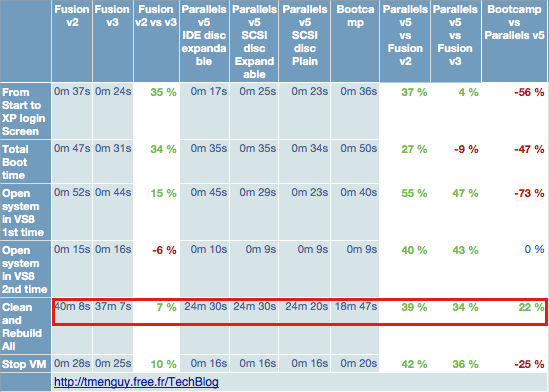
Screen shot 2009-11-24 at 09.06.45

I was shocked by the awfully long boot time of my converted VM under parallels v5, so I’ve setup another VM with only XP in it, and … it boots pretty fast, so perhaps an issue with the conversion of my VM from VMWare to Parallels. The long phase is after the login, when XP is loading my “user preferences”, I’ll look at it more closely pretty soon. UPDATED: I now use a fresh VM, as seen in the number, no issues
Beside this:

  • Fusion v3 seemed to be a nice improvement with its 64bits engine but  with only 7% improvement for the build compared to v2, well this is disappointing
  • Parallels v5 is just in another league, 39% faster than fusion v2 and 34% (a third!) than v3 for build…I’m faster than on my former laptop!
  • … and Parallels just “feel” faster: UI is slightly more responsive as launching apps.
  • UPDATED: Bootcamp: build time under bootcamp are 50% better than Fusion (so I Build twice as fast :-) ), for Parallels we still have a 22% improvement, around 6mn, with 6 or 7 of those full build a day it is a 40mn improvement of my productivity…ok not so big, as I’m not able to do a lot of stuff under Windows (all my documents, settings, etc are under MacOS).

Conclusion:

Well beside the boot time issue in Parallels (that I’m fixing using a “from scratch” VM), due to the speed increase in Visual I really can’t go back to VMWare for now.
I’ve just bought Parallels 5, and oh, they are offering a 30$ rebate if you have a VMware Fusion License (!! yes really, this is competition…), check it here, bottom right of the page.

UPDATED: After few days of heavy use, no stability issues with Parallels, The Mac is not slowed down when not compiling (as with Fusion), so really, for me Parallels is a superior product. I’m also experiencing Bootcamp : for sure it is really faster, but not so much compared to Parallels and I loose a lot in usability. The next test I’ll conduct is … building under a Bootcamp loaded as a VM in Parallels, perhaps the best of both world?

Other reviews and articles:

  • Einar Ingebrigtsen has some nice tips to tweak your parallels VM … but my benchs are simply showing that plain disc and SCSI are not really faster.
  • lostWhisper has a good head to head fusion v3 vs Parallels 5 comparison also: He prefers VMWare for dev… I don’t due to the size of our projects, I’m just more productive.
  • The Mac  Village Blog has a great screencast,
    really helpfull to understand the two products, at the end of the
    screencast you have a startup bench, where parallels really faster than
    Fusion for startup (again I think my numbers for startup are biased)
  • ATLChris is also giving its view on the two products…and recommends Parallels 5 also

Parallels 5 really seems to be a winner for them also :-)

Comments
14 Comments »
Categories
Software, Uncategorized, productivity
Tags
Apple, bootcamp, MacOSX, parallels, VMWare fusion
Comments rss Comments rss
Trackback Trackback

A little CTIA San Diego 2009 devices tour and WIP jam session: WinMonb 6.5 still not an answer, nor Moto Cliq, and yes feature phones were sexier

Thomas Menguy | October 12, 2009

After a huge AdobeMax in Los Angeles (more on that later, in another post and twitter), we’ve headed to San Diego for one day to look around this year CTIA, and attend the WIP Jam session.

Two words about San Diego: this city is GREAT! Go go Gaslamp! and the new Hitlon is just amazing…enough tourism.

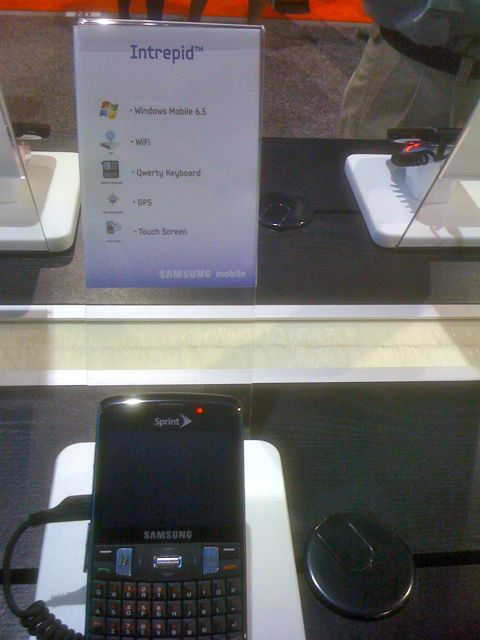
Here are some bad shots (from by old iPhone 3G) about what we’ve seen:

First some great devices from Samsung … non smartphones, but who could tell the differences today?
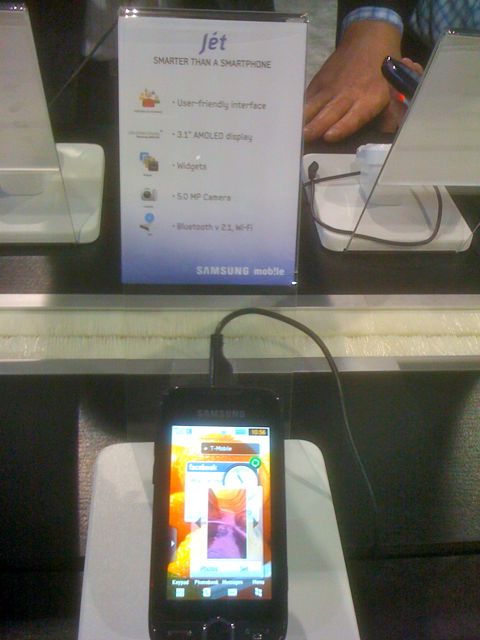
The Jet was interesting with a nice TouchWiz main screen.

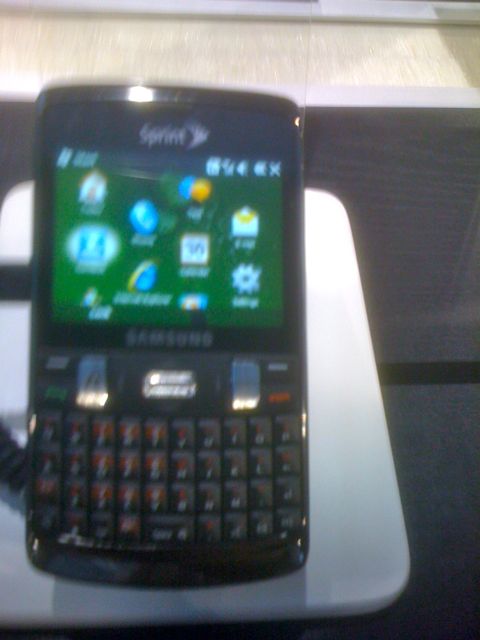
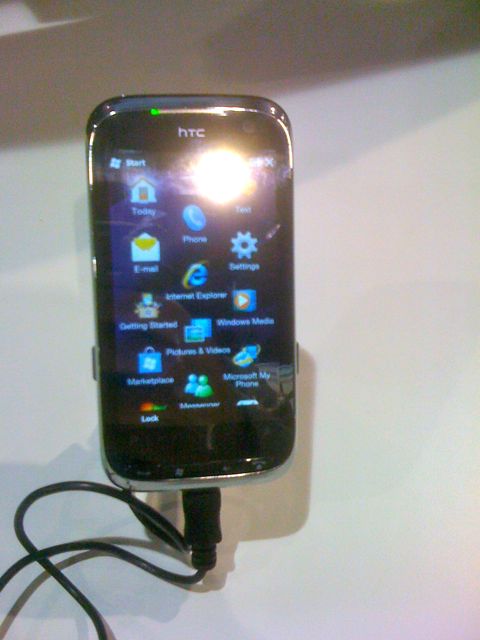
The following are WinMob phones … with winMob 6.5 (not sure for the Omnia II)

HTC was there on the Microsoft Booth to show a nice one with winMob 6.5 …

What to say about this new WinMob release: it was say to be an evolution, I’m not even sure it is, the finger navigation , either on the HTC or the Samsung, was frustrating, it was difficult to get what you needed to happen, really error prone.
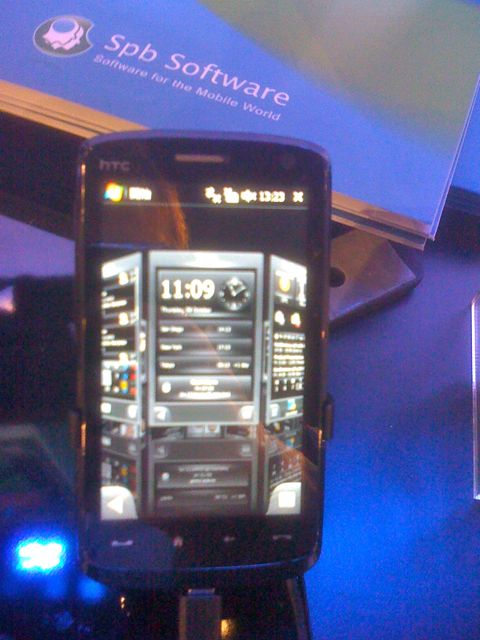
The aesthetics were slightly modified on the higher menus level, some simplification toward network configuration. The main screen is now mimicking the iPhone application list … well not with a simple icon grid but with an hexagonal layout. The Samsung has a custom front looking like the “cards” of the Palm Pré, I don’t know if it is a Samsung one or an SPB one like shown in the last picture (SPB was on the Microsoft booth).

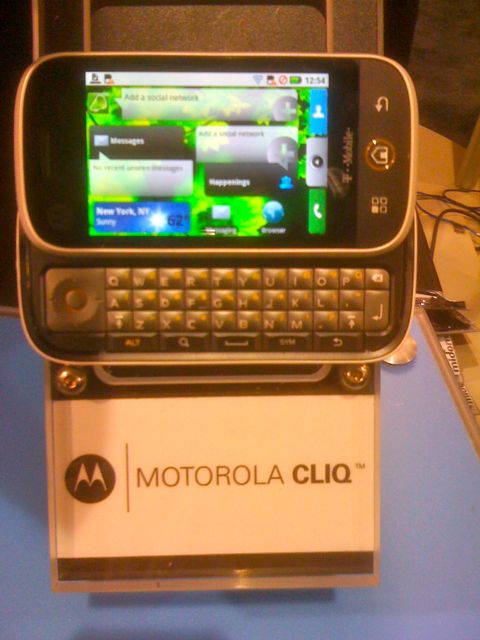
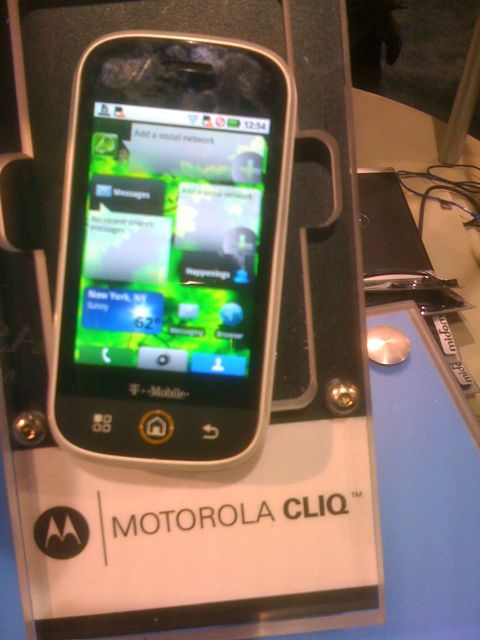
The flashiest booth was the Android one…but with only one device : the Moto Cliq…


…and well, this is not the Razor Moto was looking for. Hardware is ok without being sexy and the Moto front-end to Android seemed complex and cluttered to me, but perhaps I didn’t given enough time to it.

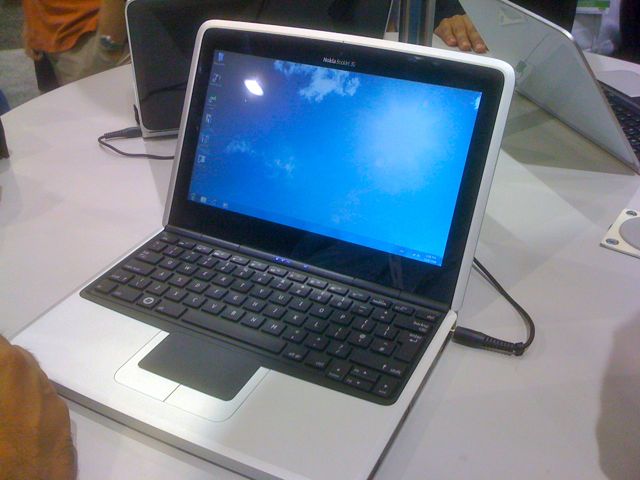
Nokia was there, little booth nearly no devices … except their laptop

And really I liked it: it was running windows 7 VERY smoothly (PowerPoint 2007 was very fast to load, a good bench), and the battery life is said to be 12 hours. Not bad if you know that this thing has a 3G modem, and the hardware is awesome, aluminium finish, and the price 500$ without operator subsidy … it may be out at 200$ with a service plan : this may be the best traveller companion ever built…Our exec will have to look at this one!

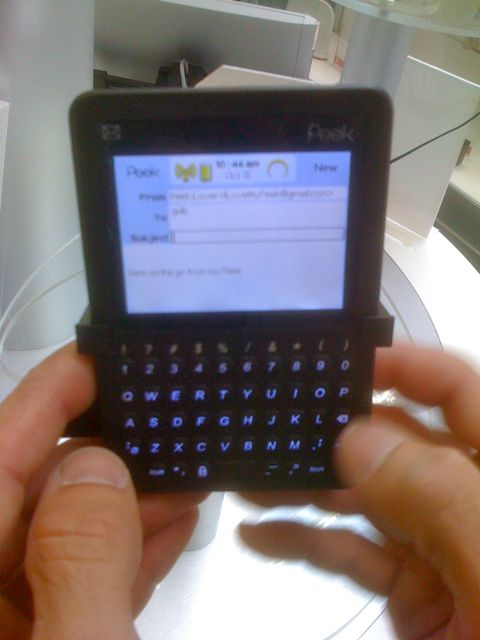
An interesting device : The Peek, a nice little inexpensive mail machine

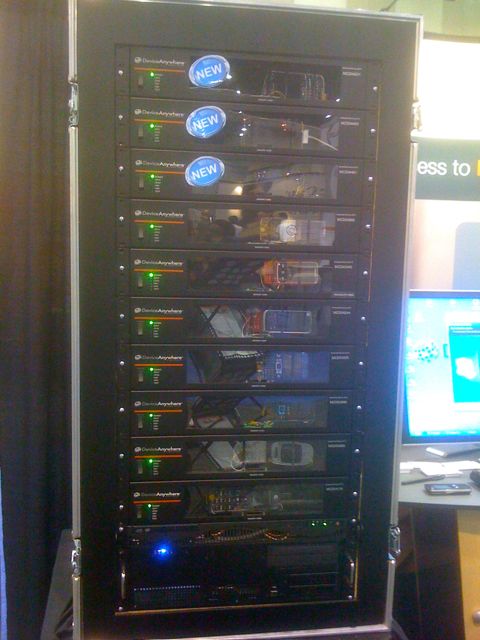
And for the ELIPS3 team : a picture of a Device Anyware rack : we are using this service every day and it’s darn good! So look at it in action, really cool stuffs

One last word about the WIP Jam session: Refreshing.

This no tie session (the real rule really enforced :-) ) was about application development but more importantly bringing the app developers together in a very casual way, and well it worked! Panelists were great (even a VC with deep mobile world knowledge!) and the informal discussions too. Really I’ll try to be there for the next one, with a little bit more preparation to present our ideas, I encourage anyone interested in mobile to attend.

Comments
2 Comments »
Categories
Gadgets/PDA/Phones etc..., Mobile Industry, Uncategorized
Tags
android, cliq, ctia, gaslamp, htc, jam session, menus, microsoft booth, omnia, smartphones, WinMob, wip
Comments rss Comments rss
Trackback Trackback

Amazing Robot Video

Thomas Menguy | August 30, 2009

Before going back to the mobile industry and (I hope) some more focused posts, here is a great video … Robots are coming, and here is their hand!

And if you missed this older one just be sure to check this amazing donkey:

Comments
1 Comment »
Categories
Uncategorized
Comments rss Comments rss
Trackback Trackback

Real Time search and subjective information value…the next google?

Thomas Menguy | July 8, 2009

twitter_logo_jan_09Well, I’ve blogged about twitter and micro blogging a while ago (see the article here).

Since then I’ve used twitter … when I say used twitter I’m wrong I hardly NEVER write a single tweet, I comment what blog posts I read in Google Reader and those comments are autmatically gathered in a feed by Yahoo Pipes automagically redirected into my Twitter account (see my article to know how to do that).

I aslo post a weekly twitter update on this blog, to have a list of my comments about the industry in a weekly form (Ok, perhaps I shouldn’t do that since I’m not writing that much …the blog feels empty with those automatic posts, I disgress).

So really I’m an old school twitterer : I tweet as if I were posting on this blog, in a less formal way, but the spirit is the same. I don’t use it as a personal/emotional way of sharing my thoughts, I try to keep it professional.

But many people don’t, and twitter is now a phenomenal data gold mine to have impression/feeling/thought about a subject, in minutes.

And here comes the Twitter search:

Twitter’s real-time search is probably one of Twitter’s most valuable features, as it allows you to keep track of an event as it unfolds in real-time

http://www.readwriteweb.com/archives/twitter_finally_integrates_search.php

I use it all the time to get point of views, ratings, instead of raw news or information, I use it to get subjective information …

The 1000€ question: Since when is it a value to get a highly not formatted, unverified, noisy and above all completely irrational piece of information ?

Well newspaper/school/etc told us that objective and verified data was key, Google is trying to have this stamp on its serach results with complex ranking algorithm (based on popularity in fact…) … but if I want to have the latest point of view about Iran troubles? An ongoing TV show, or a californian keynote? A feeling of a hard drive noise I want to buy? … I go to twitter, and it is a large amount of my search, I don’t want to wait for someone to cleanly format, verify and formalize the info I miss.

Why Real-Time Is Google’s Achilles Heel

Google cannot be real-time. It indexes the historical web, and it does it better and faster than anyone else. It finds me after-the-fact reporting on major stories from major media companies. But it misses the real-time story. And that matters today.

Sure, Google can play in the real-time web. It can buy Twitter and anything else it fancies. It will always be a big and powerful company and will make money from search just as IBM made money from PCs and Microsoft makes money online. But IBM did not dominate the PC business, and Microsoft does not dominate the online business. Likewise, Google will not dominate the real-time web.

Sorry Google, You Missed the Real-Time Web

Another very good read about this twitter real time search meaning: Twitter destined to replace Google Search

Of course we have to learn how to filter this flow….but this flow is from human beings, not machines, and well, for most of us we are human, it is why it feels so natural.

As for Google vs Twitter thing … I really think the forthcoming Google Waves paradigm shift will be the way to gather a high volume of private and public conversation, rants, etc….and if done right, google may have, again, a winner , time will tell.

Thomas

Comments
1 Comment »
Categories
Mobile Web 2.0, User Interface
Tags
2.0, Web, Web 2.0
Comments rss Comments rss
Trackback Trackback

I’m a Switcher ! :-) … hello Mac

Thomas Menguy |

The blog went slowly lately : we are doing a huge work on ELIPS 3 right now, with a closed alpha.

In the mean timeI’m now the proud owner of alatest cutting edge Macbook pro 15”…. more on my switch experience later o.

Thomas

Comments
1 Comment »
Categories
Uncategorized
Comments rss Comments rss
Trackback Trackback

Give your view about Mobile Applications Development and win $250

Thomas Menguy | May 2, 2009

I’ll relay here a survey posted by Guilhem, our product manager, to help us assess what is needed for the nest Open-Plug product (for which I don’t sleep a lot lately …)

Open-Plug would like to know about your views on Mobile Applications Development.

Take the survey for a chance to win $250 !

Take the survey now: http://openplug.mobileappsdev.sgizmo.com/

Are you or will you be involved in the development and deployment of mobile applications ?

Whether you are a Manager, or are into Business, Development, Technology or Content Creation, then your views are of high interest to us …

In exchange for taking a short survey about your views in Mobile Applications Development, you will have the option of participating in a drawing for US$250 in prize money. The survey should take no more than 5 minutes to complete.

The survey is anonymous and your responses will remain confidential.

All respondents who wish so will receive a summary of the survey results.

To take the survey, please visit: http://openplug.mobileappsdev.sgizmo.com/

Feel free to spread the word about this survey.

Thanks in advance and best regards,

The Open-Plug team

Comments
No Comments »
Categories
Uncategorized
Comments rss Comments rss
Trackback Trackback

« Previous Entries

What I’ve enjoyed reading

Recent Posts

  • No Qt for S40, Maemo and Symbian apps won’t be compatible: is Nokia really willing to unify development for OVI Appstore?
  • Why Samsung Bada makes sense vs an Android-me-too journey
  • Flex on Mobile: What’s coming in ELIPS Studio…iPhone insights (and android teasing :) )
  • Nokia & Intel two ways of (re)conquering mobile space…why not doing it together?
  • [UPDATED] Parallels 5 vs VMWare fusion 3 vs Bootcamp for the visual studio developper, compilation benchs

Meta

  • Log in
  • Entries RSS
  • Comments RSS
  • WordPress.org
rss Comments rss valid xhtml 1.1 design by jide powered by Wordpress get firefox